Build an AI Voice Learning Companion EdTech SaaS
Why Regional Language AI Voice Tutors Are a High-Demand EdTech Opportunity
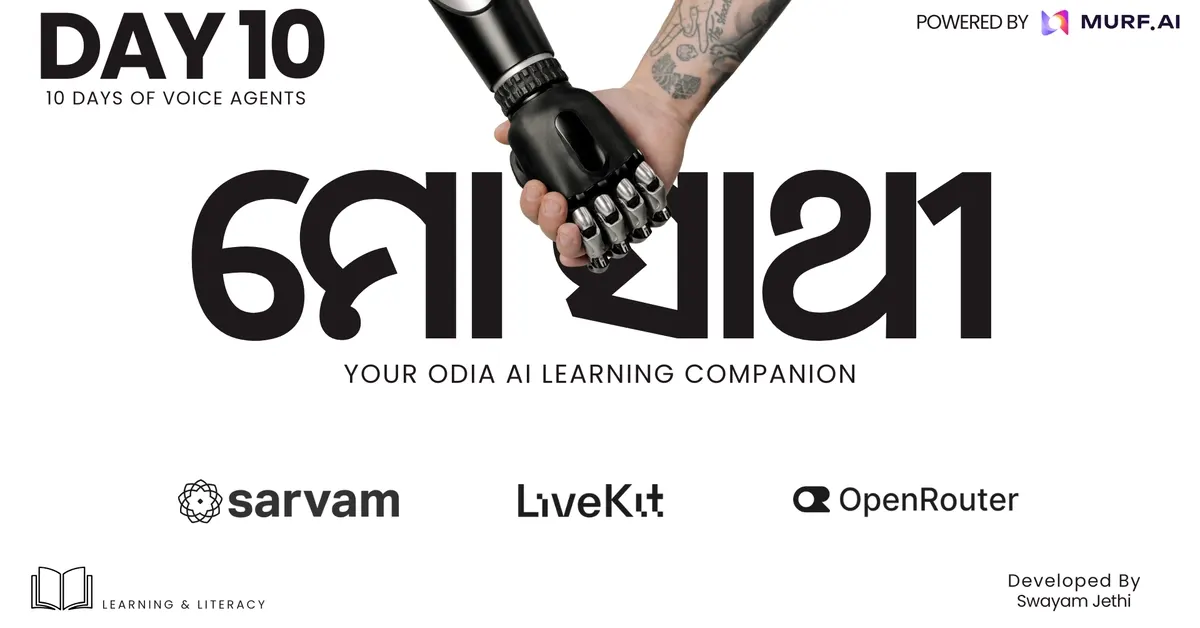
Most K-12 AI learning tools are built for English-first users, leaving millions of students in India and other multilingual markets without accessible, affordable tutoring. A student in Odisha, for example, should not have to translate a question about photosynthesis from Odia to English just to get an answer from an AI tutor. This gap has created a fast-growing niche for Indic AI powered Voice AI tools tailored to regional language learners. India’s K-12 EdTech market is projected to hit $10 billion by 2027, with 72% of non-English speaking users reporting they would pay for learning tools in their native language. For builders, this translates to a low-cost, high-margin SaaS opportunity with clear monetization paths.
Core Architecture for a Low-Latency Voice AI Learning Companion
Building a reliable voice learning tool requires separating real-time audio transport from application logic to avoid lag and downtime. The stack used for successful regional language tutors splits into two core layers:
Client Layer for Student Interaction
Use Next.js to build a distraction-free, kid-friendly interface. For younger users, a hand-drawn, paper-like aesthetic reduces cognitive load and keeps focus on learning. Host the frontend on Vercel for as little as $20 per month for small user bases, and scale seamlessly as you grow. If you need custom UI design, hire a freelancer on Fiverr for $50-$100 to build a polished, accessible interface optimized for low-end mobile devices common in rural areas.
Agent Layer for Backend Voice Processing
Build the backend in Python using LiveKit Agents to coordinate real-time audio workflows. The core processing pipeline runs in four steps:
- Input: LiveKit WebRTC captures real-time student audio directly in the browser, no app download required.
- Transcription: Use an Indic AI optimized speech-to-text model like Sarvam AI to natively transcribe code-mixed regional speech (e.g., Odia mixed with English terms like "Physics" or "Carbon") with 40% higher accuracy than generic translation APIs.
- Reasoning: Route transcribed text to a lightweight, low-cost LLM like Google Gemini Flash to process context, generate explanations, and decide when to use tools or escalate to a human teacher.
- Synthesis: Use a low-latency text-to-speech model like Murf Falcon to stream natural, conversational regional language speech back to the student in under 300 milliseconds, for a smooth, human-like conversation flow.
Non-Negotiable Features That Turn a Prototype Into a Profitable SaaS
A basic voice chatbot is not enough to compete in the EdTech space. To build a tool schools and parents will pay for, add these core features:
- Persistent Student Memory: Use a lightweight SQLite or PostgreSQL database to store student profiles, past lesson performance, and recurring struggle points. The tutor should recall a student’s name and their difficulty with fractions from their last session, creating a personalized learning experience that generic tools lack.
- RAG Pipeline for Syllabus Alignment: Build a local RAG (retrieval-augmented generation) pipeline using open-
- Automated Practice Tools: Auto-generate 5-question quizzes after each lesson, pronunciation checks for new vocabulary, and step-by-step problem-solving drills for math and science topics.
- Human Escalation Tools: Add automated outbound phone calls (
These features let you monetize in two key ways: sell individual subscriptions on Gumroad for $9.99 per month per student, or pitch bulk B2B contracts to schools and state education departments for $5-$12 per student per month. A single 1,000-student school contract can generate $5,000-$12,000 in monthly recurring revenue, the core of a sustainable SaaS business. Post short demo lessons and student testimonials on YouTube to attract organic traffic from parents searching for regional language learning tools.
9-Day MVP Build Timeline
- Days 1-2: Sign up for LiveKit, integrate Sarvam AI’s Indic AI STT model for your target regional language, and test transcription of code-mixed student speech.
- Days 3-4: Integrate Murf Falcon TTS, and craft a strict system prompt that enforces the tutor persona: explain concepts step-by-step, never hallucinate, and use simple language appropriate for K-12 students.
- Days 5-6: Build your RAG pipeline: scrape official state syllabus PDFs, chunk text into 500-token sections, embed with sentence-transformers, and store in a local vector database for low-cost, fast retrieval.
- Day 7: Add persistent student memory, and test cross-session recall of student progress.
- Day 8: Build the Next.js frontend with a kid-friendly, low-distraction UI optimized for 4G mobile networks.
- Day 9: Run end-to-end tests with 10-20 beta students, fix latency issues, and add basic auto-generated quizzes.
Total upfront cost for the MVP is under $100, with most tools offering free tiers for low user volumes.
Common Challenges And How To Overcome Them
Most builders hit three core issues when launching regional language voice tutors:
- Hallucinated content from the LLM: Fix this with strict RAG guardrails: add a system prompt rule that the AI can only answer questions using content retrieved from your indexed syllabus, and default to “I don’t know, let me connect you to your teacher” for out-of-scope questions.
- Poor accuracy for code-mixed speech: Avoid generic global STT models, and use Indic AI specific tools like Sarvam AI, which are trained on millions of hours of Indian regional code-mixed speech, and outperform generic models by 30-40% for this use case.
- High voice latency: Use LiveKit’s global edge network for audio routing, and stick to lightweight LLMs like Gemini Flash instead of larger, slower models. Cut TTS latency to under 300ms for a natural conversation flow that keeps students engaged.
- Low school adoption: Offer a free 1-month pilot to 2-3 local schools, collect testimonials from teachers and students, and use those to pitch bulk contracts to district education offices. You can also list custom build services on Upwork to generate early revenue while you build your core SaaS product.
Scaling Your Voice AI EdTech SaaS
Once you have 100+ active paying users, add these features to increase revenue and user retention:
- Multilingual support for 3-5 regional languages to expand your addressable market across India and Southeast Asia.
- Offline mode for areas with poor internet connectivity, letting students download lessons to their phones.
- Gamification features like badges, leaderboards, and weekly rewards to boost engagement.
- Integration with popular learning management systems like Google Classroom to make adoption easier for schools.
Top regional language Voice AI EdTech tools generate $20,000-$50,000 in monthly recurring revenue within their first year, with minimal overhead since most tools are cloud-based and automated. The key is to focus on a single regional language and curriculum first, rather than trying to serve all markets at once.
To scale your educational outreach, you can leverage these real-world AI monetization case studies to refine your pricing strategy.