Building and Launching an AI Coding Agent SaaS
Start By Solving a Problem You Actually Have
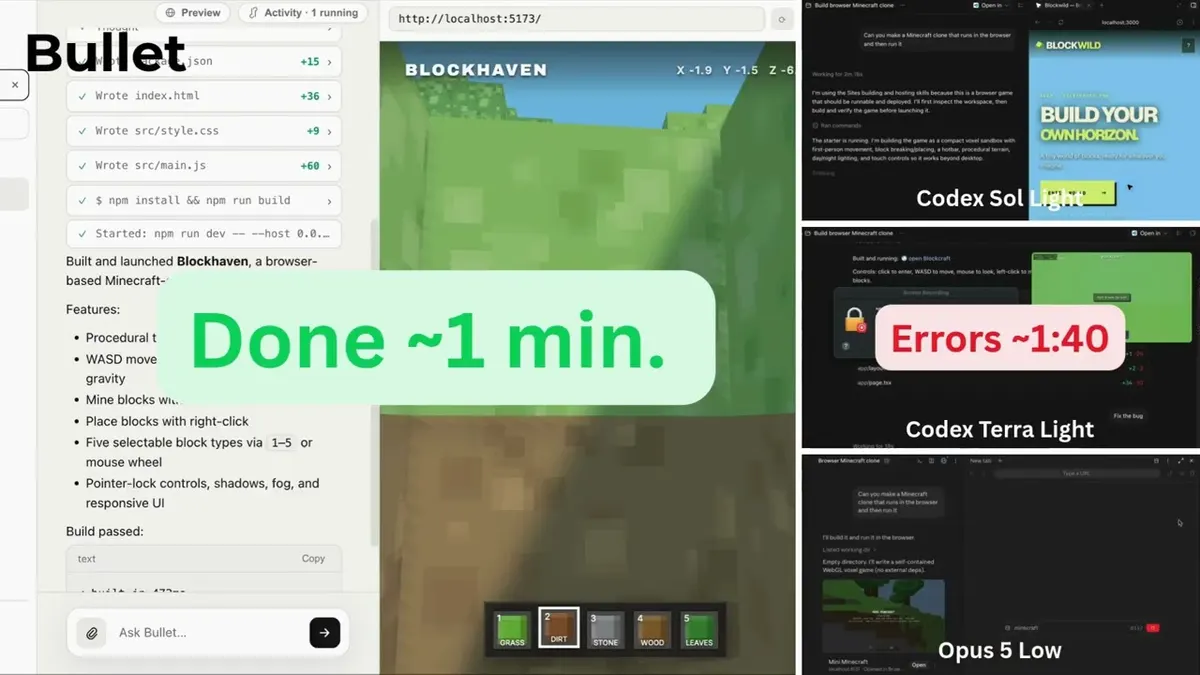
The most successful tools in this space don’t come from hypothetical market research or building for imaginary user bases. They come from solving a problem the founders face every single day. Take the team behind the fast-growing coding agent Bullet: after stints at AppLovin and Citadel, the founders initially chased a string of unrelated AI ideas, including an AI hedge fund, browser automation agent, synthetic financial data platform, and even a mobile IDE. Six pivots later, they had nothing to show for their work but failed products and wasted months of development time. Their lightbulb moment came when they stopped chasing trendy AI markets and started solving a problem they actually had: the hours they wasted every week waiting for existing coding agents to complete basic tasks.
Core Features That Differentiate Your Coding Assistant
To stand out in a crowded market of generalist AI coding tools, your SaaS needs to prioritize features that solve the most common pain points developers face with existing solutions. The most impactful differentiators center on performance, context efficiency, and cost:
Smart LLM Optimization for Cost and Performance
Most coding agents default to the most powerful (and expensive) large language model for every task, regardless of complexity. Smart model routing matches task difficulty to the right LLM: using a lightweight model for simple refactors or syntax checks, and reserving frontier models for complex architectural changes or debugging. This core LLM Optimization strategy cuts API costs by up to 27% without sacrificing output quality, per internal testing from top-performing coding agent teams.
Targeted Context Search Instead of Full Repo Embeddings
A common flaw in most coding assistant tools is that they either load entire codebases into the LLM context window (wasting tokens, hitting hard limits, and confusing the model with irrelevant code) or rely on shallow keyword searches that miss critical related files. Targeted code search uses optimized regex patterns, fallback search strategies, and pulls only the exact code snippets needed for the current task, eliminating context bloat and reducing the chance of the agent pulling irrelevant code into its workflow.
Aggressive Context Hygiene
Context window bloat is the number one cause of slow, inaccurate coding agent outputs. High-performance agents implement strict context hygiene rules: bounding tool output length, automatically discarding stale screenshots and outdated file reads, and never re-loading the same file multiple times in a single task. This keeps the LLM focused only on the most relevant, up-to-date information, reducing errors and cutting down on unnecessary LLM calls.
Parallel Task Execution to Cut Round Trips
Most coding agents process every step sequentially, leading to dozens of back-and-forth calls with the LLM that add unnecessary time and cost. Optimizing your agent to run independent tasks in parallel (such as searching multiple files for related code at the same time) while keeping dependent steps (edits, verification) sequential reduces round trips by 16% in real-world testing. For long, iterative tasks like building data pipelines or running evaluation loops, this parallel processing delivers even larger time savings, as competing tools that run all steps sequentially fall far behind.
Speed-First Architecture
Step-by-Step Guide to Building Your AI Agent SaaS
Once you’ve identified your core differentiators, follow this actionable build process to launch your product fast:
- Validate the problem before writing code: List your own daily friction points with existing coding agents, then survey 20+ other developers to confirm they share the same pain points. Don’t write a single line of code until you have proof people will pay for a solution to the problem you’re solving.
- Pick a narrow core differentiator: Don’t try to clone generalist tools like GitHub Copilot. Focus on 1-2 key features that solve the biggest pain point you identified—whether that’s ultra-low latency, specialized support for a niche programming language like Rust or COBOL, or seamless integration with a specific developer tools stack.
- Build a minimal : Use existing LLM APIs from providers like Anthropic and OpenAI for your core model, and build your custom optimizations (routing, context handling, task execution) on top. You can even use existing coding agents to build your own, as the Bullet team did when they used Claude Code to improve their initial prototype. Open-
- Test rigorously against real-world benchmarks: Don’t rely on synthetic, hypothetical tests. Use public benchmarks like SWE-bench or build internal tests based on real developer tasks (bug fixes, feature implementation, unit test writing). Track success rate, average task time, cost per task, and round trip count to measure performance and identify areas for improvement.
- Set up simple, scalable pricing: Start with a freemium tier for individual developers to test the tool on small tasks, then add paid tiers for teams. Use Stripe for payment processing, and list individual licenses on Gumroad for quick, low-overhead sales. For enterprise plans, offer custom pricing based on team size and usage, with options for on-premise deployment for teams with strict security requirements.
Launch and Grow Your SaaS to Paying Users
The developer tools market relies heavily on peer recommendations and community trust, so prioritize developer-focused launch channels first:
- Launch on developer platforms first: Post your tool on Hacker News, Reddit’s r/programming and r/SideProject, Dev.to, and share your demo on YouTube. Developer audiences trust peer feedback far more than paid ads, and a successful Hacker News launch can drive thousands of targeted sign-ups in a single day if your tool solves a real pain point.
- Offer custom services for early revenue: List custom AI Agent build services for enterprise teams on Upwork and Fiverr. Many companies pay $5,000 to $20,000 for a tailored coding assistant built for their internal codebase and workflow, which can fund your SaaS development while you build out your core product.
- Integrate with existing developer tools: Build native integrations for tools your target audience already uses: VS Code, JetBrains IDEs, GitHub, GitLab, Slack, and Jira. List your integrations on official marketplaces like the VS Code Marketplace to reach millions of existing users without extra marketing spend.
- Prioritize ongoing LLM Optimization: The LLM landscape changes fast, with new models and updates released every month. Continuously test your model routing, context handling, and task execution to ensure you’re using the most cost-effective, high-performing models for each use case. This ongoing optimization will keep your tool competitive as the market evolves.
Common Pitfalls to Avoid
- Overbuilding before validating demand: Don’t waste months building a fancy UI or dozens of integrations before you know developers actually want your core agent. Start with a simple CLI or web interface, prove people will pay for it, then add features based on user feedback.
- Neglecting context hygiene: Context bloat is the number one cause of poor coding agent performance. Prioritize clean, bounded context from day one, even if it means your initial agent has fewer features than competing tools.
- Competing on price alone: Big players like GitHub and Anthropic can always undercut you on price for generalist tools. Instead, compete on performance, specialized features, or better workflow integration that generic coding assistants can’t match.
The market for AI coding agents is still growing rapidly, with developers actively seeking faster, more efficient alternatives to existing generalist tools. If you solve a real, personal pain point, prioritize performance and cost efficiency, and engage authentically with the developer community, you can build a profitable, sustainable SaaS business in this space.
To refine your development process, these real-world AI monetization case studies offer valuable insights into scaling technical products.