Build a Profitable SaaS Using AI Agents and Cursor
The Rise of the Solo Entrepreneur: Building Micro-SaaS with AI Agents
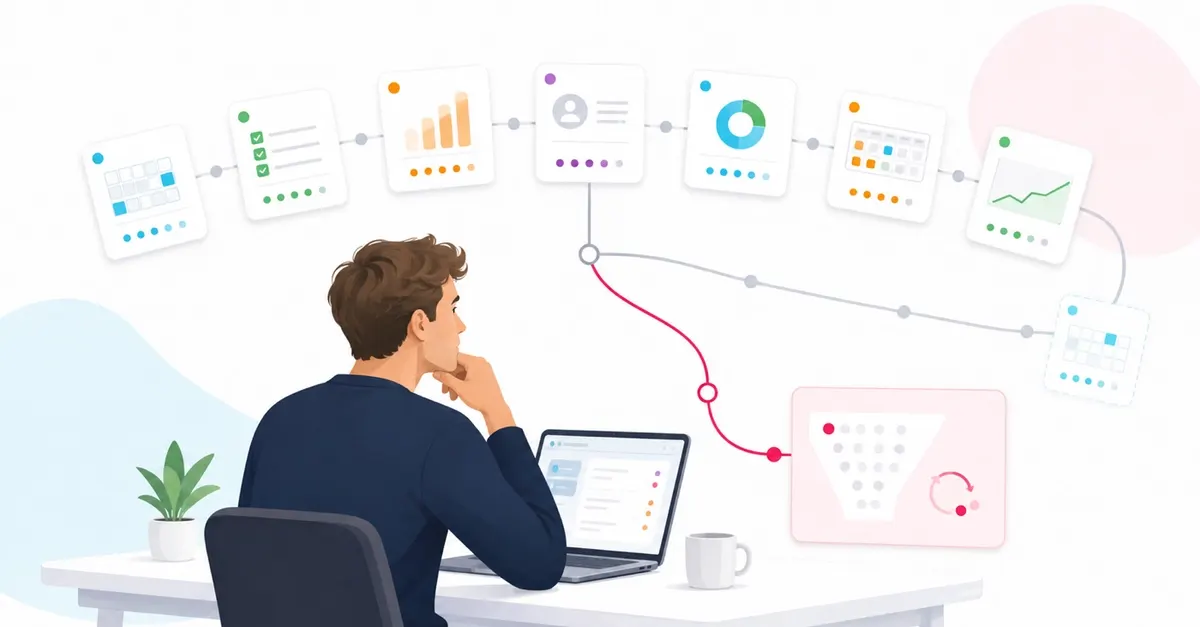
The dream of launching a Micro-SaaS—a small, niche software service that solves a specific problem—is no longer a technical impossibility for non-coders or single developers. By utilizing advanced AI Coding tools and sophisticated large language models (LLMs), a developer can now iterate through hundreds of commits and complex architectural phases in a fraction of the time previously required.
Identifying the Problem: Why Custom Tools Win
The most successful software products rarely come from a desire to "write code"; they come from a frustration with existing workflows. Many professionals find themselves trapped in a fragmented ecosystem. They use one tool for project management, another for calendar scheduling, a third for team retrospectives, and a fourth for personal notes.
This fragmentation creates three critical points of failure:
- Context Decay: Information is scattered across spreadsheets, chats, and calendars. When data is siloed, the "big picture" is lost.
- Execution Gaps: Decisions made during meetings often fail to translate into action. Without a direct link between a decision and a task, momentum dies.
- Manual Workflow Stitching: Leaders often spend more time moving data between tools than actually leading their teams.
When you identify a gap where existing Productivity Tools fail to connect "meeting, decision, and action," you have found your market opportunity. A successful Micro-SaaS doesn't need to do everything; it needs to do one specific workflow better than anyone else by connecting the dots that others leave broken.
The Modern Tech Stack for Solo Developers
To compete with established software giants, a solo founder must be hyper-efficient. This requires a stack that prioritizes speed and intelligence over manual boilerplate coding. The goal is to spend your energy on logic and user experience, while letting AI handle the heavy lifting of syntax and debugging.
1. AI-Driven Development Environments
The cornerstone of modern AI Coding is the integration of LLMs directly into the code editor. Tools like Cursor have revolutionized this space. Instead of manually typing out every function, a developer can use natural language to describe a feature, and the AI generates the scaffolding, handles the imports, and even suggests refactors. This allows a single person to manage hundreds of commits and dozens of development phases in a matter of weeks.
2. Design and Prototyping
Design used to be a massive bottleneck. Now, even if you aren't a professional designer, you can use tools like Claude Design or Midjourney to establish a visual language. You can take a single existing design concept and use AI to expand that aesthetic across multiple new modules, ensuring brand consistency without hiring a full-time UI/UX agency.
3. Rapid Iteration and Deployment
The ability to move from an idea to a functional module in a single month is the new benchmark. By breaking a large product into smaller, independent modules (such as OKR trackers, performance reviews, or specialized meeting tools), a solo founder can release updates incrementally, reducing the risk of massive system failures.
The Strategy: From MVP to Multi-Module SaaS
The most sustainable way to build a SaaS as a solo founder is to follow a modular growth strategy. Do not attempt to build a "super-app" on day one. Instead, focus on a single, high-value workflow.
Step 1: The Core Module
Identify one specific pain point. For example, instead of building a full project management suite, build a high-quality "Retrospective Tool" with specific techniques. This becomes your entry point into the market.
Step 2: Expanding the Ecosystem
Once the core module is stable, use the existing codebase and design language to build adjacent tools. If you have a meeting tool, the logical next steps are Planning Poker, 1-on-1 meeting templates, or Performance Review modules. This creates a "sticky" ecosystem where users find more value as they adopt more of your features.
Step 3: Automating the Workflow
The ultimate value of a Micro-SaaS is its ability to automate the "stitching" of work. Your software should ensure that a decision made in a meeting automatically populates a task list or an OKR tracker. This connectivity is what transforms a simple tool into an indispensable part of a professional's daily routine.
Challenges and Reality Checks
While the AI revolution makes solo development possible, it is not a "magic button." There are significant hurdles that every Solo Entrepreneur must navigate:
- The Context Window Limitation: While AI is brilliant, it can lose track of large-scale architectural decisions. You must remain the "architect," ensuring that the code generated by AI agents remains coherent across the entire system.
- The Maintenance Burden: Being a solo founder means you are also the support desk, the DevOps engineer, and the product manager. Choosing scalable, low-maintenance cloud infrastructure is vital.
- Market Saturation: Because the barrier to entry is lower, competition is higher. Your advantage must lie in deep niche expertise and a superior, highly integrated user experience.
Conclusion: The Future is Individual
The era of the massive, bloated software suite is being challenged by the era of the agile, AI-augmented specialist. By focusing on Micro-SaaS products that solve specific, interconnected problems, a single developer can build a highly profitable business. The tools are ready, the models are capable, and the market is hungry for tools that actually connect the dots of modern work.