Make Money with AI Software QA and Security Auditing
How to Monetize AI-Driven Software Quality Assurance and Security Auditing
The rise of ai-coding tools has fundamentally changed the software development lifecycle. Large Language Models (LLMs) can now generate functional code in seconds, allowing developers to build complex applications at unprecedented speeds. However, there is a massive, growing gap in the market: while AI is excellent at writing code that runs, it is notoriously bad at writing code that is secure and production-ready.
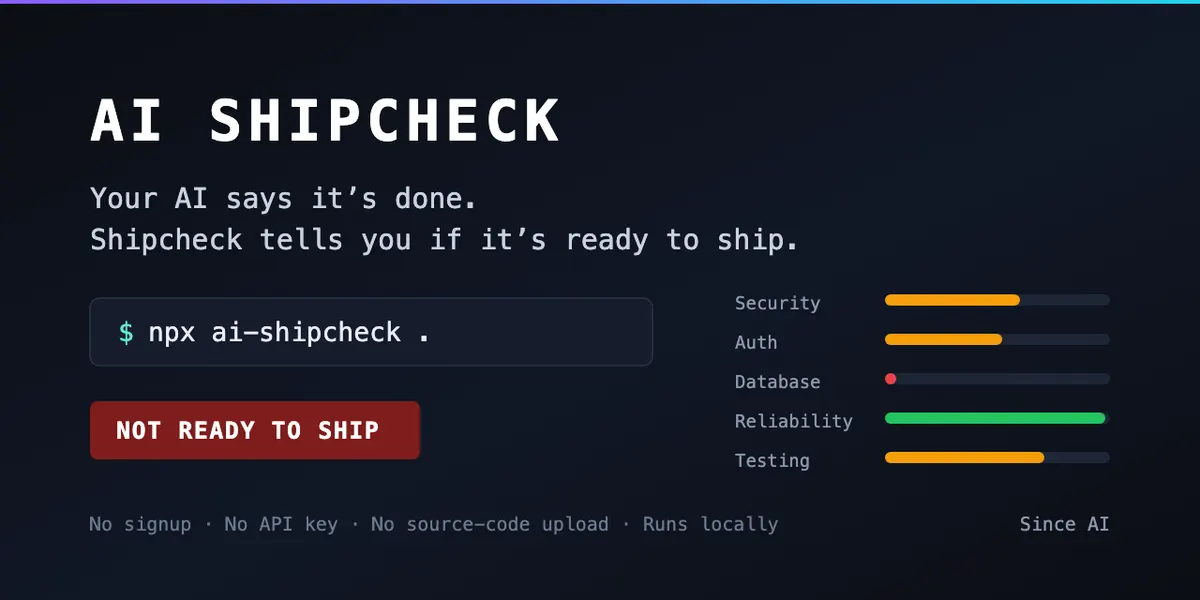
AI assistants often report a task as "finished" even if the resulting code contains critical vulnerabilities, such as exposed API keys, disabled database security, or unoptimized database queries. This creates a high-stakes opportunity for specialized freelancers and agencies to offer software-auditing services. By positioning yourself as the "safety net" for AI-generated code, you can command premium rates on platforms like Upwork and Fiverr.
The Opportunity: The "AI Gap" in Software Development
Most businesses are currently rushing to integrate AI into their workflows to save costs. They are using tools like GitHub Copilot or Cursor to accelerate development. However, these companies are inadvertently accumulating "technical debt" and security risks. They are producing code that works in a local environment but fails miserably under the scrutiny of a real-world production environment.
Common AI-generated errors include:
- Security Vulnerabilities: Using
NEXT_PUBLIC_prefixes for sensitive service-role keys, making them visible to anyone in a browser. - Database Negligence: Creating tables in Supabase or Firebase without enabling Row Level Security (RLS).
- Infrastructure Weakness: Failing to implement rate limiting or token caps on LLM endpoints, leading to massive unexpected API bills.
- Poor Observability: Writing code that lacks the necessary logging and monitoring required for devops excellence.
If you can master the tools and methodologies to detect these errors, you aren't just a coder; you are a high-value security consultant.
Building Your Service Stack: Tools of the Trade
To offer professional auditing, you cannot rely on manual code reviews alone. You need a systematic approach using static-analysis tools that can scan large codebases in seconds. A professional auditor uses a combination of automated scanners and manual verification.
1. Automated Static Analysis
2. Security and Compliance Frameworks
You should become proficient in checking for specific security categories, including:
- Authentication & Authorization: Ensuring users can only access the data they are permitted to see.
- Database & Data Safety: Verifying that database rules (like RLS) are strictly enforced.
- AI Cost & Abuse Controls: Checking for protections against prompt injection or API
3. CI/CD Integration
A high-ticket service involves not just finding bugs, but preventing them. You can charge clients to integrate security-tools directly into their GitHub Actions or GitLab pipelines. By setting up a workflow that automatically fails a build if a "critical" vulnerability is detected, you provide permanent value that justifies a monthly retainer.
Monetization Strategies: From Freelancing to Agency Models
There are three primary ways to turn these skills into a scalable income stream.
The "One-Off" Audit (Fiverr/Upwork Model)
The DevSecOps Retainer (B2B Model)
Instead of one-time projects, offer ongoing security monitoring. As the client adds new features using AI, your automated pipeline continuously scans their code. This moves you from a freelancer to a strategic partner. Retainers for this type of service typically range from $1,500 to $5,000 per month per client.
The Educational Content Route (YouTube/Gumroad Model)
There is a massive audience of developers who want to learn how to use AI safely. You can create high-quality video tutorials on YouTube demonstrating how to spot common AI coding mistakes. Once you have an audience, you can sell deep-dive courses or "Security Checklists for AI Developers" on Gumroad for $50–$150 per download.
Step-by-Step Guide to Landing Your First Client
If you are starting from scratch, follow this roadmap:
- Master the Stack: Learn the common pitfalls of modern frameworks. Understand why a Supabase service-role key should never be in a client-side environment variable.
- Build a Portfolio: Use "vulnerable" open-
- Create a "Lead Magnet": Offer a free, lightweight scan for small open-
- Optimize Your Profile: On Upwork, don't list yourself as a "Web Developer." List yourself as an "AI Code Auditor & Security Specialist." This niche positioning allows you to charge much higher hourly rates.
Conclusion: The Future of Software Quality
As AI continues to dominate the coding landscape, the demand for human oversight will only increase. We are entering an era where the bottleneck in software production is no longer "writing code," but "verifying code." By mastering software-auditing and leveraging modern static-analysis tools, you can position yourself at the forefront of this multi-billion dollar shift in the technology industry.